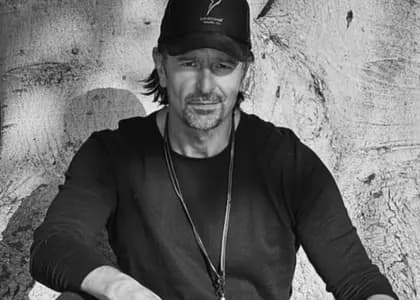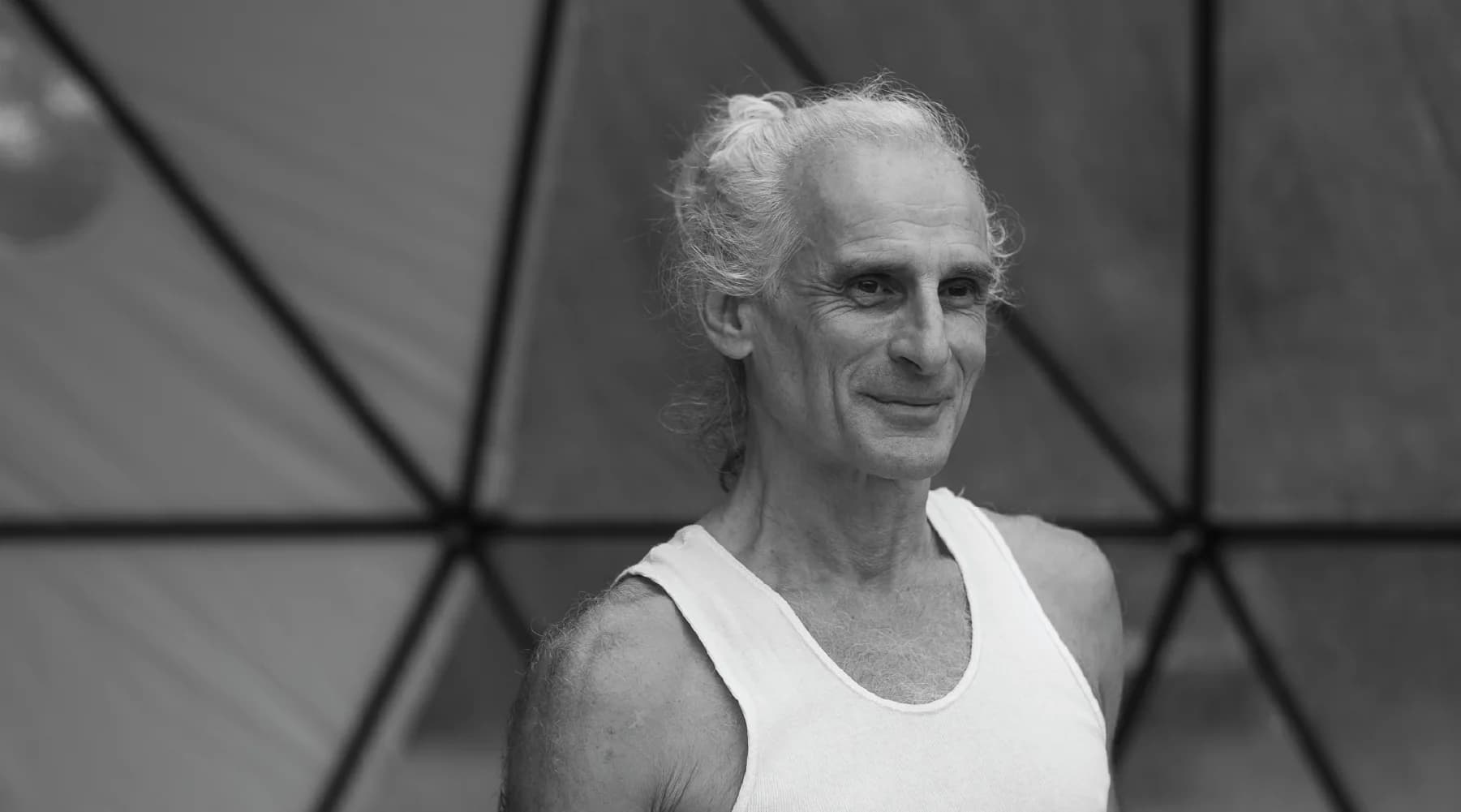
I’m a father, a scientist, a physiotherapist, and (many would say) a bit bananas. I love to dance, party with younger people, play guitar, sing with my students, and share good energy. I’d say I’m just a guy who likes to live and enjoy my life and help others enjoy theirs. My journey into yoga was anything but typical. At age six, my father taught me advanced breath-holding techniques — unknowingly initiating me into the world of pranayama. By age eight, an Olympic athlete guided me through exercises that helped me control and massage my internal organs using breath. I didn’t know it then, but I was learning yogic kriyas and bandhas. At 17 I was introduced to a Tibetan lama, through which I started exploring tantric (not sexual tantra but essence of tantra) philosophy and practices and after suffering injuries from conventional fitness methods, I've found yoga which provided relief for that - after that everything clicked and I dove deep into practicing more than 6h daily for the next decade.
Movement Meets Science
Academically, I started with a Bachelor of Science in Molecular Biology and later completed a Master’s in Physiotherapy. This naturally influenced my yoga practice and over time, my personal practice began to merge the scientific and therapeutic aspects of movement and breath control. I’ve explored all aspects of movement — and in the ’80s and ’90s, I was doing it all: animal flow, acro yoga, restorative yoga (doing these things before they were cool and mainstream), all the major styles emerging at the time like Iyengar, Ashtanga, and Bikram, as well as qigong, dance, and martial arts. I threw myself into every system, not just for variety but to understand how movement affects the body, breath, and mind at the deepest levels.
Creating Something of My Own
From a culmination of knowledge I co-founded Yoga Synergy with Bianca Machliss — a school that integrates traditional yoga with evidence-based physiotherapy and functional anatomy. I’ve now taught in over 40 countries and worked with elite athletes, dancers, doctors, and students of all ages and backgrounds. These days, my yoga is less about fixed poses and more about intelligent movement and internal awareness. Often, it looks more like qigong or free-flowing movement, but everything I teach still follows the principles of my movement system, which I’ve named 5D Flow: a way of moving from the core in five
Lessons I’ve Learned
I went through many injuries over the years each one shaping my life and my practice in profound ways. The deeper challenges, though, were often internal. As someone straddling the worlds of science and traditional wisdom, I faced skepticism from both sides. It was a constant dance between modern logic and ancient insight, and I had to learn how to honor both without compromising either.
Being a master of a craft doesn’t mean you’re a master of business. That’s been humbling. You can know your material inside out, but running a business requires a whole different set of skills. I’ve learned to ask for help, collaborate, and be okay with not knowing everything.
My Message to Founders
Be yourself. Don’t just teach what you were taught. Question it. Break it apart. See what’s still true when you strip away the traditions, the trends, the rules. You don’t need to fit into a method. You need to find what’s alive in your own body, in your own experience, and teach from there. Your work doesn’t need to look like anyone else’s to matter. In fact, it shouldn’t.
If you can't answer a question it means you don't understand it well enough. My practice always followed that - asking questions and finding answers.
The world doesn’t need more yoga teachers following scripts. It needs more founders willing to explore the unknown, and trust what they find.
Business Takeaways from Yoga Founders Magazine
Let the message lead
Simon didn’t set out to “build a business.” He shared something that felt real, lived, and useful, and people naturally gathered around it. When the message is clear, the structure can form around it.
Real authority is honest
He doesn’t mask uncertainty or pretend to have it all figured out. That honesty stands out in an industry where too many hide behind polished expertise. His credibility comes from transparency, not perfection.
Depth over polish
Simon’s journey isn’t filtered. It’s full of pain, curiosity, experimentation and that’s exactly what makes it magnetic. People don’t connect to performance. They connect to process.
Don’t chase validation
He’s not chasing trends or approval. He follows what feels true in his body and work, even if it’s unconventional. That self-trust is why his teachings don’t fade, they stick, because they’re original.