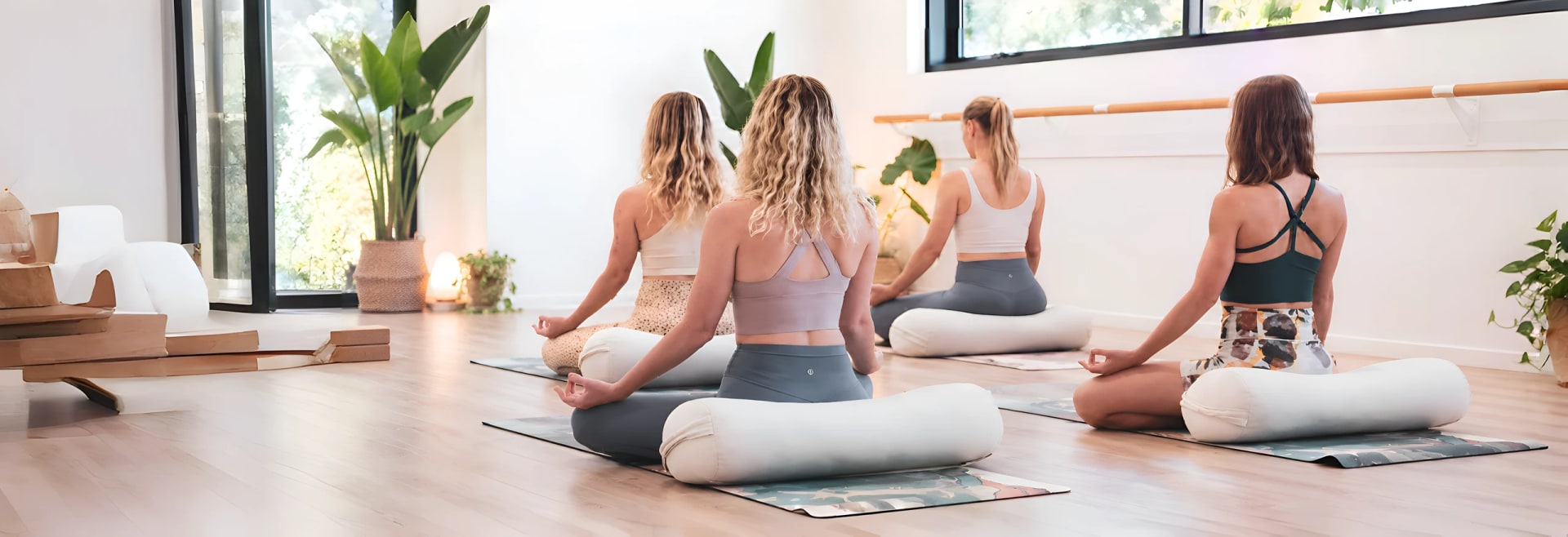
A life outside of yoga? For me, everything is yoga. That’s why my Instagram blurs the line between professional and personal. My dad brought me to my first yoga class when I was sixteen, a rebellious teenager who didn’t expect to fall in love with it. I’ve been practicing ever since. The rebellion is still there, but now it’s more focused, more useful. Part of me moving to Japan was rebellion too—it was probably the last place anyone expected me to end up, including myself. I’ve always been a traveler, and yoga has been my grounding force no matter where I go. I completed my first 200-hour teacher training in India at twenty-one, and since then, yoga has been part of my everyday life. Over the years, I’ve logged more than 1500 hours of teacher trainings as both student and facilitator.
Before yoga, I studied Creative Advertising at RMIT University in Melbourne (Class of 2011). In many ways, it was the perfect preparation for yoga—it taught me how to stay creative and sane in a competitive world. Many of my classmates eventually showed up in my yoga classes years later.
When people talk about great loves, they say, “when you know, you know.” My love for yoga felt exactly like that. From the first class, I was all in.
Building a Life of Practice
I was only twenty-one when I got certified to teach, back when most studios were run by older teachers. So, I waited. I practiced every day—sometimes twice a day—at Melbourne’s iconic Hotbox Prahran studio. That time built not just strength, but community. Many of those teachers and diehard students went on to open their own studios, and we’re still friends today.
The early challenge was my age, but I taught friends in their homes and workplaces until I was ready. At twenty-four, I returned to India for my 500-hour training and came back to Melbourne to teach full-time. Timing was on my side. I had already been a regular student, so doors opened quickly. I taught up to 28 classes a week—sunrise to evening. I’d often fall asleep on friends’ couches, exhausted but happy. Teaching gave me energy. Eventually, I moved into mentoring teachers, managing studios, running retreats, workshops, and teacher trainings. In 2016, I moved to India again to assist on 300-hour trainings. Through a mix of timing and luck, I was promoted to the lead teaching team, teaching over thirteen 200- and 300-hour trainings across three seasons in South India. It was the greatest learning experience of my life. Teaching really is learning twice.
When Rebellion Turned into a Business
I never planned to own a studio. I liked being close to the teaching and far from the numbers. But when I found myself in Japan during the pandemic, with no yoga studios nearby, I decided to create one. That’s how Shizen Yoga Studio was born.
Japan wasn’t part of the plan. I arrived in December 2019 on a working holiday visa, hoping for a short break from my heavy teaching schedule. Then COVID hit. I started teaching online, and the classes grew quickly. Locals began asking for in-person sessions, so I partnered with a friend to share a space that was half climbing gym, half yoga studio. After one winter season, we parted ways, and I found my own space—a traditional Japanese building with tatami floors and even a kabuki stage, which I turned into a communal tea area and front desk.
The studio sits in a small tourist ski town. It’s seasonal, open for daily classes in winter, and retreats outside the season. With no competition, I can shape it however I like. It feels authentic, grounded, and true to my purpose.
Lessons I’ve Learned
Through running Shizen, I’ve learned that everything really is yoga. The parts of the business that frustrate you the most are often the ones that teach you the most. I learned to trust my instincts, take regular breaks to avoid burnout, and never teach from a place of people-pleasing.
Opening a business in Japan came with a mountain of paperwork and cultural learning curves, but it deepened my practice more than any training ever could. Breath, patience, and persistence are what carried me through.
More than anything, I’ve learned to hold things lightly. I’ve spent five years building this studio. It’s been lonely at times, but deeply rewarding. There are moments when I wonder if I’ll stay or move on. When I hold the business lightly, I remember why I love it. And if I ever walk away, it won’t be failure—it’ll just be another evolution in my yoga journey.
My Message to Founders
Your yoga business is an extension of your practice. Let it evolve with you. Don’t cling too tightly to what it’s supposed to look like—let it breathe. If you build from a place of authenticity, people will feel it. Success isn’t always expansion or growth; sometimes it’s peace, community, or simply doing what you love with integrity.
The business will test you, but that’s the yoga. Learn to see every challenge as a form of practice. And remember, it’s okay to outgrow what you once built. Holding it lightly doesn’t mean you care less—it means you’ve learned to love without attachment.
Business Takeaways from Yoga Founders Magazine
Authentic Growth
Build your yoga business around what feels real to you, not what trends dictate. The best growth happens when your offerings reflect your truth.
Energy Management
Your schedule should serve your energy, not drain it. Teach and create in ways that sustain your joy and curiosity.
Adaptability Wins
The pandemic tested everyone’s flexibility, and Rowie turned uncertainty into opportunity. When things shift, adjust quickly but intentionally.
Hold It Lightly
Attachment leads to burnout. Whether it’s a class, retreat, or full business, let go of rigid expectations and allow flow.
Lead Through Connection
Community is the foundation. Hire and collaborate with people who share your values and energy—it makes every part of the journey more meaningful.